
Author

Mark Bedard
CEO and Founder
What if the problem with your outbound isn't your message — but your motion?
You just found the perfect prospect.
Their company just raised a fresh round of funding. They're hiring five new SDRs. Their VP of Sales just posted about a new go-to-market push. You’ve got a hook, a reason, and the timing’s perfect.
But now what?
You copy their name into a spreadsheet. Jot down your “why now” on a sticky note. Think, I’ll come back to this later. Except later never comes. And that golden moment? Gone.
This is what outbound often looks like today. Not because reps don’t know what to do — but because the handoff between research and action is broken.
The reps who win are fixing that. Not by doing more, but by doing it smarter. And they're turning relevance into revenue by building motion that matches their message.
The outbound strategy that actually works
Here’s what outbound looks like when it’s done right — not rushed, not robotic.
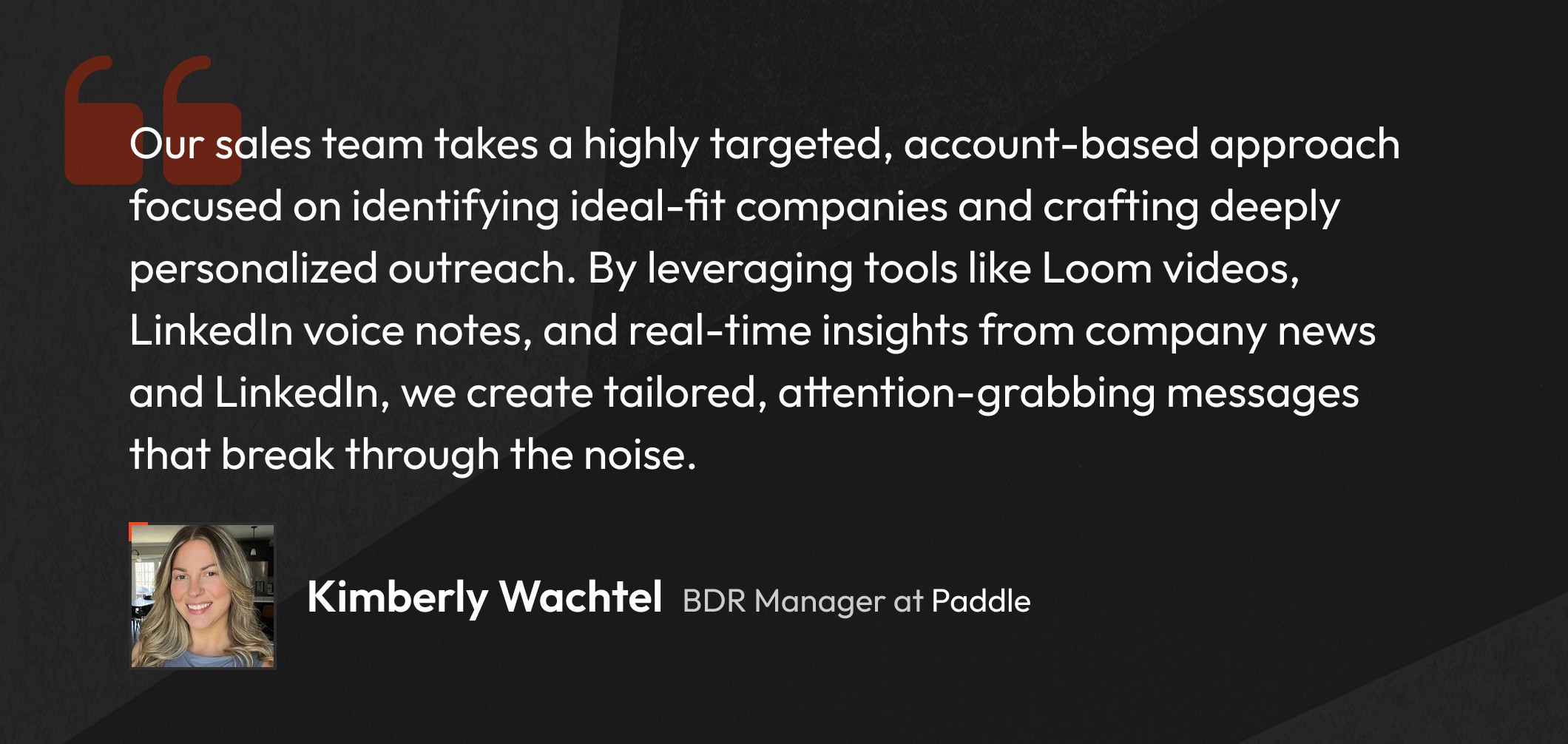
Kimberly’s approach isn’t magic. It’s modern outbound done properly:
Account-based targeting over random list pulls
Personalized channels like Loom and LinkedIn voice notes
Real-time signals to drive relevance — not generic pain points
And crucially, a way to act on it immediately, without losing steam
Compare that to the traditional motion:
Pull a list
Blast a template
Wait for replies
Repeat
One gets ignored. The other gets responses.
And it’s not just because of the message — it’s because of how the rep executes on the moment.
LinkedIn is where it all starts
If you’re prospecting the right way, you’re living on LinkedIn.
It’s where reps:
Spot role changes, growth trends, and hiring signals
Catch leadership posts hinting at new initiatives
Hear how buyers describe their own challenges
Interact naturally — through voice notes, DMs, or comments
The insights are there. The context is there. The signals are there.
The only question is: can you do something with them before they go cold?
From signal to CRM: where most reps drop the ball
Most reps aren’t struggling to find the right prospects — they’re struggling to keep momentum once they do.
You find the buyer, but then:
You bounce between tabs
You forget the reason they stood out
You lose the flow
Or worse, you dump the contact into your CRM with zero context
Signal, wasted.
It’s not the prospecting that’s broken — it’s the process. That moment of clarity turns into friction, and friction kills deals before they start.
The upcell extension: outbound, streamlined
This is exactly where upcell’s Chrome extension fits into a modern sales workflow.
You’re already on LinkedIn. You’ve found your prospect. You’re ready to move.
With one click — Export — you launch a zero-friction motion:
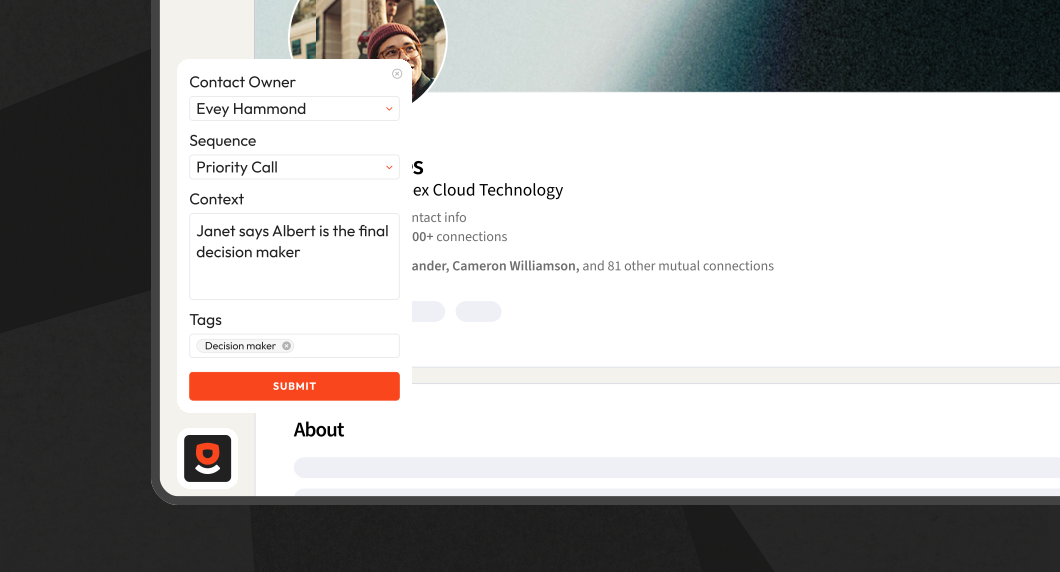
Add context: the “why now” that gets lost later
Assign ownership and tags
Choose a sequence in your engagement tool
Push it all directly into your CRM, clean and structured
If the record already exists, upcell simply enriches it and updates it — no duplicates, no mess
It’s a seamless bridge from research to revenue.
What Kimberly’s quote shows is that the intention behind good outbound is clear. What upcell enables is the execution to match it — at scale.
Why this kind of outbound is working now
Outbound hasn’t gotten harder — it’s gotten more honest.
Buyers know when they’re being bucketed into a sequence. They know when you’re sending the same message to 20 people. And they know when a seller actually shows up with something worth reading.
That’s why:
Personalized emails see 4.5x more replies
Outreach tied to business signals moves 30% faster through pipeline
High-performing reps are 3x more likely to capture context in the moment it’s discovered
(source: Gong, Outreach, and Pavilion benchmark data)
The difference isn’t talent. It’s process.
The takeaway: personal + repeatable wins
Outbound hasn’t stopped working. Bad outbound has.
The reps who are winning aren’t chasing leads — they’re building real pipeline with:
Relevant messaging
Real-time signals
Better workflows
And tools that don’t slow them down
This isn’t just about personalization. It’s about operationalizing personalization in a way that’s scalable and structured.
So here’s your challenge:
🔁 Go back to one prospect you recently viewed on LinkedIn.
Ask yourself:
– What signal did I see?
– Why were they a fit?
– What did I do with that insight?
Now imagine if every rep on your team could capture and act on that context in one click — without breaking their flow.
That’s not just better outbound. That’s the kind of motion modern buyers respond to.